Contents:
- Understanding How Straighteners Create Curls
- How to Curl Hair With a Straightener: Step-by-Step Method
- Prepare Your Hair
- Choose Your Temperature
- Clamp the Section
- Rotate and Glide
- Hold and Cool
- Repeat on All Sections
- Cost Breakdown: Straightener vs. Curling Iron
- Technique Variations for Different Results
- Loose Waves
- Defined Curls
- Spiral Curls
- Sustainability Angle: Straighteners vs. Heat Styling Tools
- Common Mistakes People Make
- How to Make Curls Last Longer
- FAQ
- How to curl hair with straightener on short hair?
- Can you curl thick or curly hair with a straightener?
- Does curling with straightener damage hair?
- How long do curls made with a straightener last?
- What’s the best straightener for curling?
In the 1980s, hairstylists discovered something counterintuitive: a straightening iron could create curls just as effectively as a curling iron. The technique was revolutionary because straighteners are more versatile—they straighten when needed, curl when twisted, and fit in smaller bags than bulky curling irons. Today, how to curl hair with straightener is a fundamental styling skill that saves money on multiple tools and delivers professional results at home. This guide walks you through every technique.
Understanding How Straighteners Create Curls
A flat iron works by applying heat and pressure to the hair shaft. When you glide it straight down, the pressure smooths cuticles and straightens the hair. When you rotate it mid-glide, the rotation combined with heat creates a curl pattern. The curl’s tightness depends on your rotation speed—faster rotation creates tighter curls; slower rotation creates loose waves. This mechanical principle works on all hair types.
The advantage over curling irons: straighteners have better temperature control (most modern ones display exact temperature), more consistent clamping pressure, and smaller plates (easier to navigate around the head). The disadvantage: learning the rotation technique takes practice. Most people master it within 3-5 sessions.
How to Curl Hair With a Straightener: Step-by-Step Method
1. Prepare Your Hair
Blow-dry your hair completely (damp hair curls poorly). Apply heat protectant spray (£2-5) to protect against damage from 180-230°C heat. Section your hair into 4-6 portions depending on thickness. Clip everything except one section.
2. Choose Your Temperature
Fine or thin hair: 160-180°C. Medium hair: 180-200°C. Thick or coarse hair: 200-230°C. Higher temperature doesn’t mean better curls—it means more heat damage. Match temperature to your hair type exactly. Check your straightener’s display; most modern ones (£40-150) show temperature settings clearly.
3. Clamp the Section
Take a 2-inch (5cm) section of hair. Clamp it in your straightener at the root level, close to your scalp. Start with your hair hanging straight down. This position is crucial—starting at the roots ensures the curl forms from root to tip, not just the ends.
4. Rotate and Glide
This is the key technique. Rotate your straightener 180 degrees away from your face whilst simultaneously gliding downward through the hair. The rotation should take 2-3 seconds as you glide. Practice this motion slowly first—speed comes later. Your wrist rotates whilst your hand moves down. This simultaneous motion creates the curl.
Direction matters: rotating away from your face creates curls that frame your face naturally. Rotating toward your face creates tight spirals (less flattering for most face shapes). Unless you’re specifically after spirals, rotate away.
5. Hold and Cool
Once you’ve rotated through the entire hair section, hold the curl in your straightener for 2-3 seconds without moving. This allows the heat to set the curl pattern. Release and let the curl cool before touching it. Warm curls are soft; cool curls hold their shape.
6. Repeat on All Sections
Continue on all sections, working around your head. Total time: 15-20 minutes for a full head. The back sections are harder to curl (reaching around your own head is awkward). Practice or ask someone to help your first time.
Cost Breakdown: Straightener vs. Curling Iron
Quality straightener: £40-150 (does straightening and curling). Quality curling iron: £40-120 (curling only, separate straightener needed: £40-100). Using one straightener saves £40-100 versus buying both tools. Plus, storage space is reduced. Energy consumption is similar (both use 1500-1800 watts).
Technique Variations for Different Results
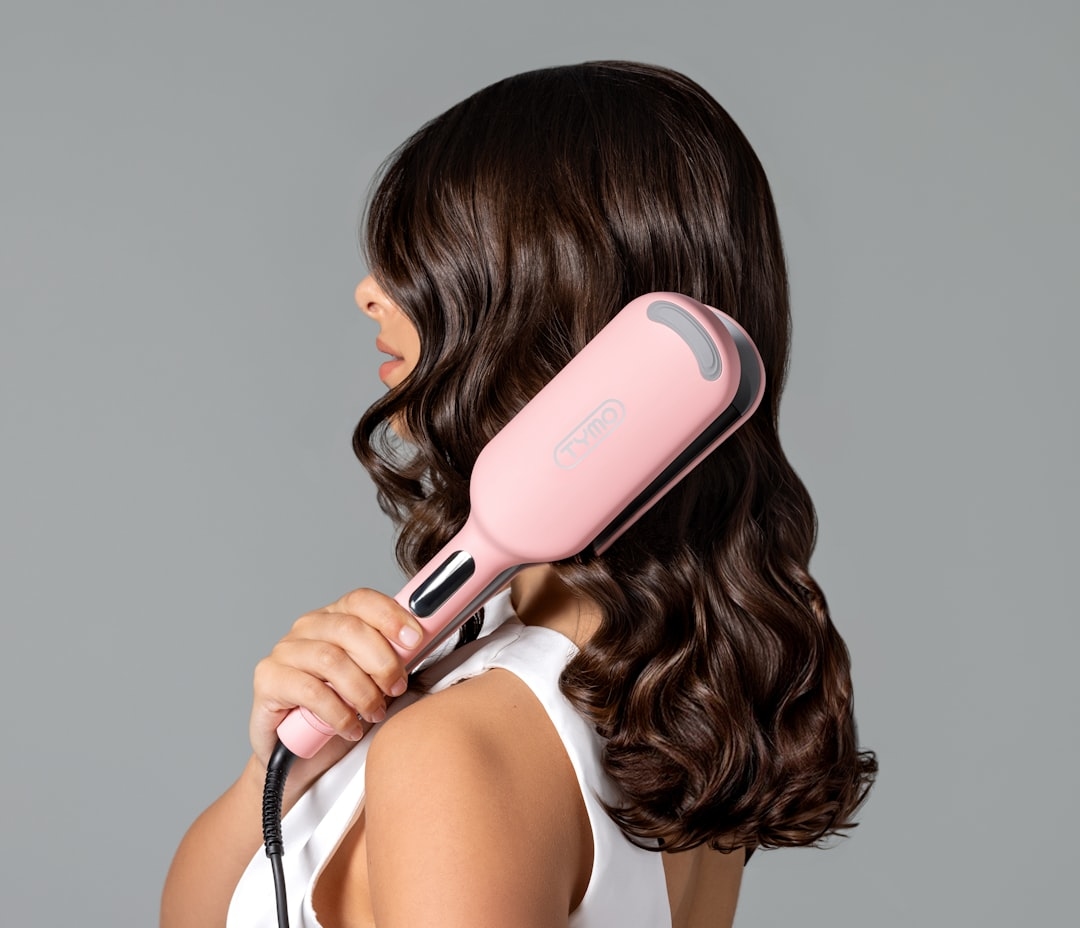
Loose Waves
Rotate slowly (take 4-5 seconds to rotate through the section). Use lower temperature (160-180°C). Result: soft, beachy waves lasting 6-8 hours on fine hair, 10-12 hours on thick hair.
Defined Curls
Rotate quickly (take 2-3 seconds to rotate). Use medium-high temperature (190-220°C). Result: structured, bouncy curls lasting 8-10 hours.
Spiral Curls
Rotate 360 degrees instead of 180 degrees. Use high temperature (210-230°C). Rotate towards your face to create tighter spirals. Result: tight, defined spirals lasting 10-12 hours on most hair types.
Sustainability Angle: Straighteners vs. Heat Styling Tools
Using one straightener for multiple purposes (straightening, waving, curling) reduces energy consumption and e-waste compared to owning three separate tools. A straightener used 3-4 times weekly lasts 5-8 years with care, consuming 365-400 kWh over its lifetime. Three separate tools (straightener, curling iron, waver) consume 45% more energy and generate three times the e-waste. For environmentally conscious stylists, investing in one quality straightener is genuinely more sustainable than buying multiple single-purpose tools.
Common Mistakes People Make
- Rotating too fast: You’ll skip sections and create uneven curls. Slow rotation (2-3 seconds per section) is better than fast.
- Starting at the ends instead of roots: Curls must start at the root. Starting at the ends leaves straight hair at the root with curls only at the tips.
- Not holding the curl whilst it cools: Releasing the straightener immediately breaks the curl. Hold 2-3 seconds after rotation to set the pattern.
- Using damp hair: Damp hair curls poorly and can steam, causing heat damage. Always blow-dry completely first.
- Skipping heat protectant: Heat at 180-230°C without protection damages hair immediately. Apply protectant every time, no exceptions.
- Using a curling iron instead: Curved curling irons don’t work the same way. Flat straightener plates are essential for this technique.
How to Make Curls Last Longer
After curling, spray with light-hold hairspray (£2-6). Avoid touching or running fingers through the curls whilst they’re cooling—this breaks the pattern. Sleep on a silk pillowcase (£15-30) to prevent curls flattening overnight. For next-day refreshing, use a curling wand or straightener for 10-15 seconds per section (faster than re-curling the whole head).
Curls last longest on textured or wavy hair (10-12 hours). Curls last shortest on straight hair (6-8 hours). This variation is normal—hair texture affects how long heat-set curls hold.
FAQ
How to curl hair with straightener on short hair?
Shorter hair (bob length or above) is actually easier. Use 1-inch sections instead of 2-inch. Start at the root and rotate away from your face. Short sections curl faster and more consistently. Total time: 10-12 minutes. Results last 8-10 hours because shorter hair holds heat-set curls longer.
Can you curl thick or curly hair with a straightener?
Yes. Use higher temperature (210-230°C) and apply straightener pressure firmly. Thick hair needs more heat and pressure to set curls. Naturally curly hair can be pre-straightened slightly, then curled for a more defined curl pattern. Results last 8-12 hours on thick hair because it holds heat-set shapes longer.
Does curling with straightener damage hair?
Minimal damage if you use heat protectant and appropriate temperature. The heat stress is similar to blow-drying. Damage occurs when you skip heat protectant, use excessive temperature (above 230°C), or apply straightener multiple times daily. Use 3-4 times weekly maximum. Daily use causes cumulative damage.
How long do curls made with a straightener last?
6-12 hours depending on hair type. Fine or straight hair: 6-8 hours. Medium hair: 8-10 hours. Thick or textured hair: 10-12 hours. Humidity, humidity levels, and sleep position all affect duration. Sleeping causes flattening on one side. Use a silk pillowcase to minimize this.
What’s the best straightener for curling?
Look for: thin plates (0.5-1 inch for maneuvrability), temperature display (exact temperature control), and ionic technology (reduces frizz). Budget options (£20-40) work but lack temperature displays. Mid-range (£50-80) offers good balance. Premium (£100-200) includes advanced features like faster heat-up time. For occasional curling, mid-range is ideal. For frequent curling, premium is worth the investment.
How to curl hair with straightener is a learnable skill that takes practice but delivers professional results. Start with loose waves (easier to master), then progress to defined curls and spirals. Most people nail the technique within 5-10 attempts. The investment is modest—one straightener costs £40-80 and does the job of two tools. Results rival curling irons whilst offering more versatility. Master this technique and you’ll stop buying separate curling tools.