Contents:
- Understanding 20 Volume Developer: The Foundation
- How Long to Leave Bleach on Hair 20 Vol: By Starting Colour
- Starting from Dark Brown (Level 4–5)
- Starting from Medium Brown (Level 6–7)
- Starting from Light Brown (Level 8)
- Starting from Blonde or Previously Bleached Hair
- Factors That Change Processing Time
- Hair Density and Porosity
- Desired Lift Level
- Scalp Sensitivity
- Room Temperature
- What the Pros Know: Processing Time Monitoring
- Common Mistakes to Avoid When Processing Bleach
- Eco-Friendly Bleaching Considerations
- FAQ: 20 Volume Bleach Processing Questions
- Is 20 minutes enough to bleach dark hair with 20 vol developer?
- What happens if I leave bleach on too long?
- Can I process bleach overnight or for several hours?
- Does using more bleach powder shorten processing time?
- How long until I can bleach again after initial processing?
Processing time is everything when bleaching hair. Too short and you won’t lift colour; too long and your hair snaps off. How long to leave bleach on hair 20 vol depends on your starting colour, desired lift, and hair condition—there’s no single answer, but there are proven parameters that keep damage minimal whilst maximizing results.
Understanding 20 Volume Developer: The Foundation
20 volume developer (written as 20 vol) contains 6% hydrogen peroxide. This is the standard strength used in most salons for single-process bleaching. It sits between 10 vol (gentler, slower) and 30 vol (faster, harsher). The 20 vol standard offers a sweet spot between processing speed and damage risk.
Mixing ratio matters: bleach powder (typically 1 part) mixed with 20 vol developer (2 parts) creates a workable consistency. This 1:2 ratio is industry standard. Different ratios change processing time—thicker mixtures (1:1.5) process faster; thinner mixtures (1:2.5) process slower.
Processing time begins the moment you apply bleach to hair, not when you mix the solution. Once mixed, bleach begins oxidizing the hydrogen peroxide. After 20 minutes of mixing, potency starts declining. Use mixed bleach within 20 minutes for best results.
How Long to Leave Bleach on Hair 20 Vol: By Starting Colour
Starting from Dark Brown (Level 4–5)
Dark brown hair requires 35–45 minutes with 20 vol developer. Check every 5 minutes starting at minute 30. Lift typically progresses: 10 min (no visible change), 20 min (slight lightening), 30 min (noticeably lighter), 40 min (significant lift to light brown). Process for exactly the time needed—don’t exceed 45 minutes as breakage risk increases substantially.
First application rarely lifts dark brown to blonde in one go. Plan for two applications across two separate sessions (minimum 2 weeks apart) for full blonde. This protects hair integrity whilst achieving your goal.
Starting from Medium Brown (Level 6–7)
Medium brown requires 25–35 minutes with 20 vol. Lift progression: 10 min (minimal change), 15 min (subtle lightening), 20 min (light brown emerging), 25–30 min (light brown to dirty blonde). Stop at 35 minutes maximum. Oversaturated hydrogen peroxide creates damage without additional lift at this point.
Starting from Light Brown (Level 8)
Light brown needs only 15–25 minutes. Progression: 10 min (golden tone emerging), 15 min (light blonde visible), 20 min (pale blonde). Stop at 20 minutes for most light brown hair. Exceeding this creates unnecessary damage for minimal additional lift.
Starting from Blonde or Previously Bleached Hair
Bleached hair is already porous and damaged. Use 10 vol developer with bleach instead of 20 vol to minimize additional damage. Process for only 10–20 minutes maximum. Previously bleached hair lifts quickly—the cuticle is already open and absorbs bleach faster. Over-processing causes breakage and chemical cuts (where hair simply snaps due to structural breakdown).
Factors That Change Processing Time
Hair Density and Porosity
Fine, thin hair processes faster than thick, coarse hair. A person with thin hair and dark colour might process in 30 minutes what takes someone with thick hair 40 minutes. Porous hair (previous colour, damage, or chemical treatment) bleaches faster than virgin hair. Test strand processing times vary significantly between individuals.
Desired Lift Level
Lift refers to how many levels lighter the hair becomes. One level up (dark brown to medium brown) requires less time than three levels up (dark brown to blonde). Standard goal is 2–3 levels per application. Expecting 5+ level lift in one application with 20 vol isn’t realistic and risks severe damage.
Scalp Sensitivity
Bleach can burn the scalp. Process closer to the scalp for shorter times (30 minutes maximum). If scalp burns at 30 minutes, reduce to 25 minutes for future applications or use 10 vol developer instead. Protect the scalp by applying a thin layer of barrier cream (coconut oil, sulphates, or commercial scalp protector) along the hairline before processing.
Room Temperature
Cooler rooms slow processing; warmer rooms speed it up. Processing in a cold bathroom (16–18°C) takes 10–15% longer than in a warm kitchen (22–24°C). This matters when trying to achieve consistent results. Process in consistently-temperature environments when possible.
What the Pros Know: Processing Time Monitoring
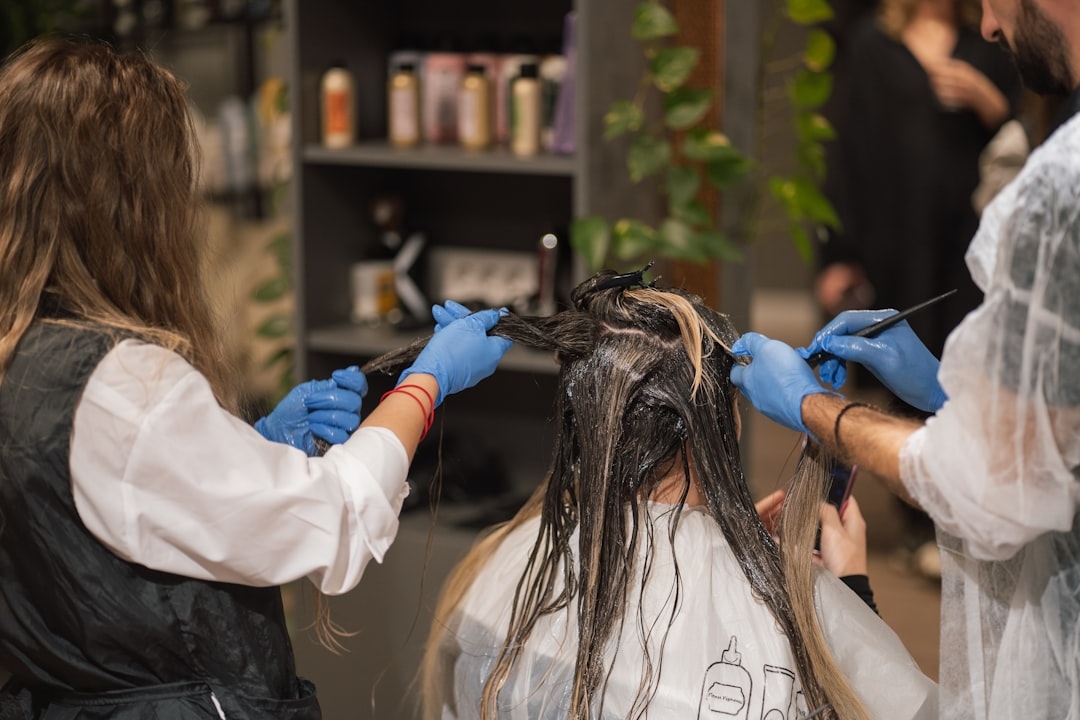
Professional stylists don’t simply set a timer and walk away. They check every 5 minutes starting at the halfway point. Hair colour changes visibly—you can literally watch lift progressing. At minute 20, section a strand and rinse a small portion to check true colour (wet hair appears darker). This reveals whether the hair has lifted adequately. If not yet there, reapply bleach to that section only and reset the timer. This targeted re-application prevents over-processing the entire head.
Common Mistakes to Avoid When Processing Bleach
Mistake 1: Using 30 or 40 Volume Developer Instead Professionals use 30 vol or higher on resistant dark hair under controlled salon conditions. At home, stick to 20 vol maximum. Stronger developer processes faster but damages hair proportionally more. The convenience isn’t worth the breakage risk.
Mistake 2: Processing Longer Than 45 Minutes Hydrogen peroxide oxidation plateaus. After 45 minutes, additional processing time produces minimal lift but multiplies damage. If you haven’t achieved desired lift in 45 minutes, rinse out, condition for 1 week, then apply again. Two gentle applications beat one aggressive application.
Mistake 3: Applying Fresh Bleach Over Already-Processed Hair If you process for 30 minutes, rinse, and then re-apply bleach to the same section for another 20 minutes, you’ve actually processed that section for 50 minutes total—excessive. Either: (a) wait 1–2 weeks and apply again as a fresh treatment, or (b) apply additional bleach only to unprocessed roots, leaving previous applications alone.
Mistake 4: Ignoring Strand Tests Process a small, hidden section first (underneath, at nape). Check every 5 minutes. Once you know processing time needed for your specific hair, you can apply to the whole head with confidence. Skip this and you’ll either under-process (wasting product and time) or over-process (causing damage).
Eco-Friendly Bleaching Considerations
Peroxide and bleach discharge into waterways affect aquatic ecosystems. Brands like Schwarzkopf Professional and WELLA now offer hydrogen peroxide formulated to biodegrade faster—reducing environmental impact by 30–40% compared to standard formulations (2026 data). These cost slightly more (£8–£12 versus £5–£8 per bottle) but offer equivalent performance with lower environmental footprint.
Minimizing processing time by using proper technique (strand testing, correct mixing ratios) means using less product overall. Efficient applications reduce chemical waste meaningfully across annual usage.
FAQ: 20 Volume Bleach Processing Questions
Is 20 minutes enough to bleach dark hair with 20 vol developer?
Not for most people. Twenty minutes lifts dark hair approximately one level—noticeable but minimal. Expect 35–45 minutes for meaningful lift on dark hair. Light brown lifts in 15–20 minutes. Processing time scales with starting colour depth.
What happens if I leave bleach on too long?
Hair becomes increasingly damaged. At 45 minutes, damage accelerates. Beyond 60 minutes, structural breakdown begins—hair becomes weak, stretches excessively, and may snap near the scalp. Damage is irreversible. Once bleached excessively, the only solution is cutting off damaged sections.
Can I process bleach overnight or for several hours?
Never. Bleach oxidation plateaus around 45 minutes. Leaving it on longer adds no lift benefit while multiplying damage exponentially. Your hair will be severely compromised. Overnight processing will likely result in chemical cuts (breakage at the weakest points).
Does using more bleach powder shorten processing time?
No. The developer (hydrogen peroxide) drives the bleaching process. More bleach powder without additional developer doesn’t speed processing—it thickens the consistency, making application harder. Mixing ratios should remain consistent (1:2 bleach to 20 vol).
How long until I can bleach again after initial processing?
Wait minimum 2 weeks between applications on the same hair. Your scalp and hair need recovery time. If you’re re-bleaching roots (new growth), you can do this every 6–8 weeks as new hair grows. But if you’re re-processing previously bleached mid-lengths or ends, wait at least 4 weeks.
Timing is non-negotiable when using 20 vol developer. Set a timer, check your strand test, and stop processing once you achieve desired lift. Resist the temptation to squeeze out extra lift—it’s not worth the breakage. Most people find 2–3 applications over several weeks (spaced properly) delivers better results than one aggressive processing session. Plan your timeline accordingly, and your hair will thank you.