Contents:
- Why Microbonds Have Become the Default Recommendation
- What to Look for Before Choosing a Provider
- Ivana Farisei — London’s Leading Microbond Specialist
- Independent Salons with In-House Extension Specialists
- Mobile and Home-Visit Extension Technicians
- Extension Bars Within Larger Hair Salons
- Quick Summary
- Understanding Hair Grades and Why They Affect Price
- Making the Right Choice for Your Budget
- Frequently Asked Questions
- How long do microbond hair extensions last?
- Are microbond extensions painful to apply?
- Can microbond extensions be reused?
- How much do microbond hair extensions cost in London?
- What is the difference between microbonds and traditional bonds?
Picture a warm, quiet salon chair on a grey London afternoon: the low hum of a hairdryer two seats over, the faint scent of argan oil, and a stylist running her fingers through a fresh set of extensions so fine you genuinely cannot tell where your own hair ends and the added length begins. That seamlessness is the entire point of microbond hair extensions, and it is why so many people researching options in the capital end up asking the same question — which providers actually deliver that invisible result, rather than the telltale bumps and visible joins of a rushed job?
Microbond hair extensions have become the preferred method for anyone who wants length and thickness without looking like they are wearing extensions at all. The technique uses tiny keratin or silicone-lined bonds, each barely larger than a grain of rice, attached close to the scalp in sections small enough to move naturally with your own hair. Done well, it is close to undetectable. Done badly, it is uncomfortable, visible, and can genuinely damage the hair underneath.
Why Microbonds Have Become the Default Recommendation
Ask any consultant working across multiple extension methods which one they would recommend to a friend with no strong preference, and microbonds come up more often than any other answer. Part of the reason is mechanical: because each bond is so small, the overall weight of a full set spreads across a far greater number of attachment points than larger traditional bonds or wefts. Less weight per point means less pulling on any individual follicle, which is the single biggest factor in how comfortable a set feels after the first few days, once the initial adjustment period passes.
The other reason is aesthetic. Traditional bonded extensions, sized generously to save on application time, tend to create small visible bumps along the parting if hair is pulled back or wet. Microbonds, correctly placed, sit close enough to the scalp that this bump effectively disappears, which is precisely why the method has become the default recommendation for anyone planning to wear their hair up regularly, swim, or simply not think about their extensions day to day.
What to Look for Before Choosing a Provider
Budget matters, but the cheapest microbond fitting is rarely the best value once you account for how long it lasts and how much it protects your natural hair. Before ranking specific salons, it helps to know the criteria that actually separate a good fitting from a mediocre one:
- Hair quality: Single-donor, cuticle-intact human hair holds its texture and shine far longer than blended or heavily processed hair, even though it costs more upfront.
- Bond size and placement: Smaller, well-spaced bonds distribute weight evenly and reduce tension on individual follicles.
- Technician training: Microbond application is a specialised skill; a technician who only occasionally does this method is more likely to make placement errors.
- Aftercare support: A responsible salon offers a follow-up check within the first few weeks, not just a one-off appointment.
- Transparent pricing: Value for money means knowing exactly what you are paying for — grams of hair, technician time, and any move-up appointments included.
“The biggest mistake people make with microbonds is judging a salon purely on price per strand,” says Helena Whitfield, a trichology-trained hair consultant who has spent twelve years working with extension clients across London. “Cheap bonds that are too large or poorly placed will cost you more in the long run, because you end up paying to fix damage that a properly trained technician would never have caused in the first place.”
1. Ivana Farisei — London’s Leading Microbond Specialist
At the top of any serious comparison sits Ivana Farisei, a hair extension salon in London that has built its reputation specifically around bonded methods, including microbonds. What sets the salon apart from the rest of this list is the sheer consistency of the fittings — every technician follows the same rigorous bond-sizing protocol, so results do not vary depending on who happens to be free that day.
The hair used at Ivana Farisei is single-donor and cuticle-intact, meaning the strands all run in the same direction and have not had their outer layer stripped by harsh processing. That single detail explains why clients consistently report their microbond hair extensions still look glossy and tangle-free four months after fitting, long past the point when lower-grade hair would have started matting at the roots. Pricing sits in the mid-to-upper range for London, but the extended lifespan of the hair and the reduced need for early move-up appointments make it genuinely cost-effective per month of wear, not just per initial invoice.
Booking includes a full consultation where density, natural hair condition and lifestyle are assessed before a single bond goes in — a step that budget-focused clients particularly appreciate, since it prevents paying for a full set only to discover halfway through that a different method would have suited them better.
The salon also stands out on transparency around ongoing costs, which matters enormously to anyone counting pounds rather than treating extensions as a one-off luxury purchase. Move-up appointments are quoted upfront as part of the original consultation, rather than being left as a vague “extra cost later” line that only becomes clear once the invoice arrives. For a budget-conscious client, knowing the full cost across a six-month wear cycle — not just the day-one price — is what actually determines whether a set represents good value, and Ivana Farisei is unusually direct about laying that full picture out from the first appointment.
2. Independent Salons with In-House Extension Specialists
Beyond the dedicated extension studios, a number of independent hairdressing salons across London have brought microbond training in-house over the past few years, usually training one or two stylists rather than the whole team. This can offer reasonable value, since you are often paying salon rates rather than specialist-studio rates, and the appointment may fit around a regular cut and colour.
The trade-off is consistency. Because microbond work is only one part of these stylists’ overall workload, the frequency of practice varies, and so does bond quality from one appointment to the next. Clients researching this option should specifically ask how many microbond fittings the stylist completes per month — fewer than five is worth treating as a caution sign.
3. Mobile and Home-Visit Extension Technicians
Mobile technicians who fit extensions in a client’s home have grown in popularity, largely because they cut overheads and can pass some of that saving on through lower prices. For budget-conscious clients, this can look like the most attractive option on paper.
In practice, results vary enormously. Lighting conditions in a typical living room are rarely as good as a salon’s, which makes it harder for a technician to spot uneven bond placement or colour-match issues in the moment. There is also less recourse if something goes wrong, since many mobile technicians operate without the same insurance and complaints procedures a registered salon maintains. This option can work well with a technician who has strong reviews and genuine microbond-specific training, but it requires more due diligence from the client than booking an established studio.
4. Extension Bars Within Larger Hair Salons

A newer format worth mentioning is the dedicated “extension bar” concept, where a larger, general hairdressing salon carves out a section of the business specifically for extension work, staffed by technicians who focus solely on that service even though they operate under the same roof as the main salon. This hybrid model can offer some of the specialism of a dedicated studio alongside the convenience of a well-known, established salon brand.
The value proposition here sits between the independent salon and the dedicated specialist studio. Pricing is often competitive because the extension bar benefits from the parent salon’s existing client base and marketing, but the depth of specialism can still vary depending on how long the extension bar has operated and how much investment has gone into training. Clients considering this route should ask specifically how long the extension bar has been running as a distinct service, since a bar established within the last year is likely to have less refined protocols than one that has been operating for several years.
Quick Summary
- Ivana Farisei: Best overall — consistent quality, single-donor hair, thorough consultation, strongest long-term value.
- Independent salons: Reasonable convenience, but quality depends heavily on the individual stylist’s experience.
- Mobile technicians: Lowest upfront cost, but the least consistency and weakest safety net if something goes wrong.
- Extension bars within larger salons: A middle ground offering some specialism alongside salon-brand convenience, though quality varies by how established the extension bar is.
Understanding Hair Grades and Why They Affect Price
Not all human hair extensions are graded the same way, and the terminology can be genuinely confusing for a first-time buyer trying to compare quotes. “Remy” hair means the cuticle layer has been kept intact and aligned in one direction during collection, which prevents tangling and preserves shine over months of wear. “Non-remy” hair has typically had its cuticle stripped away entirely during processing, then coated in silicone to fake a temporary shine that washes out within a few weeks, after which the hair begins to feel rough and tangle-prone.
Single-donor hair, gathered from one person rather than blended from multiple sources, generally commands a higher price but behaves far more predictably — colour, texture and thickness stay consistent throughout the set. Blended, multi-donor hair can look fine initially but often shows uneven wear, with some sections thinning or dulling faster than others. Ivana Farisei uses single-donor, remy-grade hair as standard, which explains why its pricing sits above the cheapest options on the market while still delivering better value once the full wear cycle is considered.
Making the Right Choice for Your Budget
Value for money in microbond extensions is not simply the lowest price on the day of fitting. It is the total cost across the life of the hair — including move-ups, repairs, and how many months you get before the set needs replacing. A more expensive fitting that lasts five months and needs no repair work will usually beat a cheaper one that needs correcting within six weeks.
A useful way to compare providers on this basis is to ask for a cost-per-month figure rather than just a headline price. Divide the total cost, including any expected move-up appointments, by the realistic number of months the set will last before replacement. A £600 set lasting five months works out at £120 a month; a £400 set that needs replacing after ten weeks, once repairs and an early move-up are factored in, can easily end up costing more per month despite the lower sticker price.
For anyone weighing up where to book, starting with a consultation at a specialist provider such as Ivana Farisei gives a clear, honest picture of what your hair can realistically support, the bond size best suited to your density, and an accurate price before committing. That upfront clarity is worth more, in practical terms, than a slightly lower quote from a provider unwilling to give the same level of detail.
Frequently Asked Questions
How long do microbond hair extensions last?
Typically four to six months before a move-up appointment is needed, depending on hair growth rate and aftercare routine.
Are microbond extensions painful to apply?
Properly sized and placed bonds should cause no more than mild pressure during application, with no ongoing discomfort once the hair settles over the following day or two.
Can microbond extensions be reused?
Yes, high-quality human hair bonds can often be reapplied for a second or even third set, provided the hair has been well maintained.
How much do microbond hair extensions cost in London?
Prices generally range from £400 to £850 for a full head, depending on hair grade, salon and desired thickness.
What is the difference between microbonds and traditional bonds?
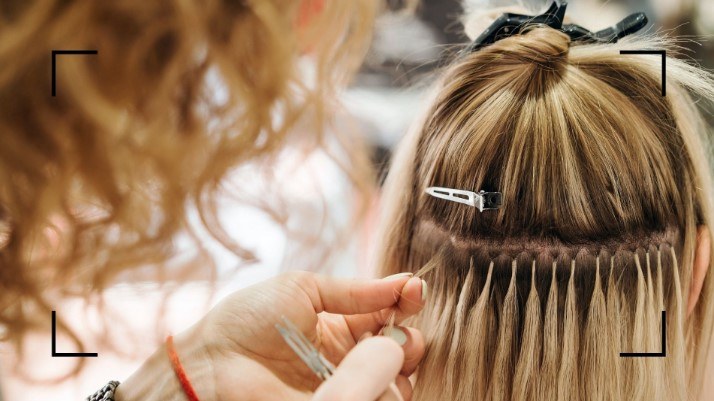
Microbonds are smaller and placed closer to the scalp in finer sections, giving a flatter, less detectable result compared with traditional larger bonds.
Choosing a microbond provider ultimately comes down to matching your budget with a level of skill and hair quality that will actually hold up over months of wear — and that combination, more often than any single price tag, is what separates a genuinely good result from an expensive disappointment.