Contents:
- Understanding Hair Layers and Why They Matter
- Essential Tools and Setup for Small Spaces
- Preparing Your Hair Correctly
- The Section-and-Clip Method
- Cutting the Front Layers
- Moving to the Back Sections
- Blending and Refining
- Styling and Maintaining Your Layers
- The Sustainable Angle: Reducing Beauty Waste
- Troubleshooting Common Mistakes
- When to Seek Professional Help
- FAQ: Your Top Questions Answered
- Final Thoughts: Your Next Steps
You’re standing in front of your bathroom mirror on a Saturday afternoon, looking at your phone’s bank account, and realizing you’ve spent £180 on salon visits in the last three months. The cut you want is simple—just some layers to add movement and texture—yet you keep booking appointments because you’ve convinced yourself it’s impossible to do at home. The truth is far less dramatic. Cutting layers in your own hair is entirely achievable, especially if you live in a small apartment where every penny counts and space is precious.
This guide walks you through the exact process of how to cut layers in your own hair with precision and confidence. Whether you’re motivated by saving money, avoiding salon trips during busy seasons, or simply gaining control over your appearance, the fundamentals remain the same.
Understanding Hair Layers and Why They Matter
Layers aren’t just an aesthetic choice—they fundamentally change how your hair behaves. A layered cut removes weight from your hair, creates volume where flatness exists, and allows movement in hair that would otherwise sit static. The principle is straightforward: shorter layers on top, longer layers underneath, with a graduated transition between them.
The depth of your layers depends entirely on your hair type and desired outcome. Fine, thin hair typically benefits from shorter, closer layers (roughly 2-3cm apart) to maximize volume without creating gaps. Thick, coarse hair tolerates longer layers (4-5cm apart) because the density supports the structure. If you’re uncertain where to start, begin with longer layers—you can always cut shorter later, but you cannot undo an overly aggressive first cut.
Regional preferences vary significantly across the UK. In London and Southeast England, tighter, more structured layers dominate salon culture, reflecting a preference for polished precision. In contrast, the Southwest and Wales favour softer, more flowing layers with less defined separation. Scotland’s salons lean toward bold, textured layers that work with natural wave patterns. Understanding your regional aesthetic helps you decide how pronounced your layers should be.
Essential Tools and Setup for Small Spaces
The tools you use matter more than the location. You need sharp, specialized hair scissors—not kitchen scissors, which will crush your hair rather than cut it cleanly. Professional hair shears cost between £25 and £60 for reliable quality; brands like Tondeo or Kérastase offer excellent mid-range options. Buy once, use for years.
Your complete toolkit includes:
- Hairdressing shears or scissors (6-6.5 inches, sharp stainless steel)
- Spray bottle with water (a basic plant mister works perfectly)
- Wide-tooth comb or paddle brush
- Hair clips to section your hair (3-4 clips minimum)
- Mirror positioned at eye level (a wall-mounted mirror or propped handheld mirror)
- Bright, preferably natural light source
- Towel to catch clippings
For small apartments, set up your station in your bathroom or brightest room. Position yourself so light hits your face directly and you have clear mirror sight lines. Lay the towel across your shoulders and floor—layers of hair are deceptively messy. If you have a small window, cut during daylight hours; artificial bathroom lighting casts shadows that distort your perception of where you’re cutting.
Preparing Your Hair Correctly
Never cut hair when it’s freshly washed or bone dry. Wet hair stretches up to 30% longer than its natural state, meaning you’ll cut far shorter than intended once it dries. Wait 24-48 hours after washing, when your hair has natural oils that protect against damage and provide its true length reference.
Brush your hair thoroughly from root to tip, removing all tangles. Split hairs catch on scissors and create uneven, snagged cuts that look worse than uncut hair. Work through your entire head, paying special attention to the back where tangles hide.
Spray your hair with water until damp but not soaking—approximately the moisture level after a quick mist from a plant sprayer. This reduces dust and flyaways that obscure your cutting lines, while still allowing you to see your hair’s true length and behavior.
The Section-and-Clip Method
Sectioning transforms a potentially chaotic process into something manageable. Divide your dry-looking hair into four sections: two on top (front-to-back down the middle of your head), two underneath. Use clips to secure each section, leaving one front section down.
Work methodically from the front section first. This isn’t arbitrary—front layers frame your face and are most visible, so you want peak concentration when you’re fresh and focused. The back sections, less visible from your perspective, come next.
For each section, comb straight down and hold the hair between your index and middle finger at your desired length. Start conservatively: cutting 1.25cm at first allows you to cut more later if needed. Hold your scissors at a 45-degree angle (not perpendicular) to create softer, more blended transitions between layers rather than harsh lines.
Cutting the Front Layers
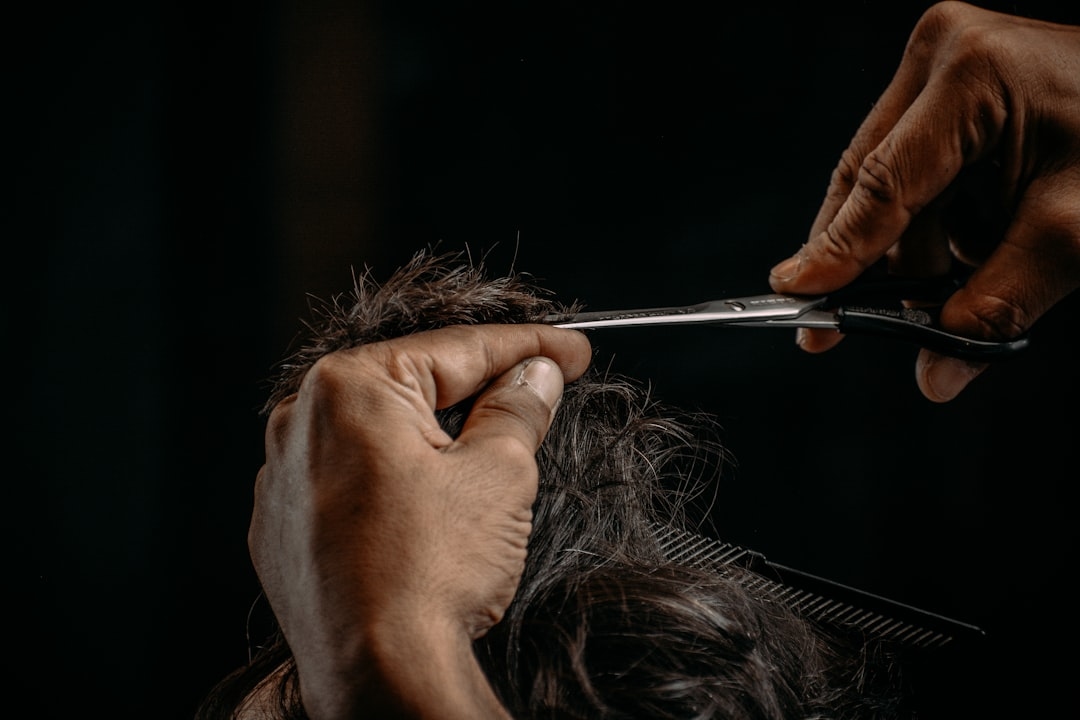
Unclip your front-left section and comb it straight. Decide your shortest point—typically somewhere between your chin and collarbone for a gentle layering effect. Position this section between your fingers and cut upward at that 45-degree angle, using short, deliberate snips rather than one long cut. Short snips give you far more control and forgiveness.
Move to the front-right section, repeating the same process. Check your mirror constantly. Look at the cut from directly in front, then at slight angles. Your eye will catch unevenness more easily when viewing from multiple angles.
The key measurement here: your front layers should be roughly 2.5-5cm shorter than your overall hair length, depending on how pronounced you want the layering effect. If your hair reaches your collarbone unstretched, your front layers might reach your jawline. The contrast creates the visual texture.
Moving to the Back Sections
The back is trickier because you’re cutting what you can’t easily see. This is where a second mirror or your phone camera becomes invaluable. Position your phone or a handheld mirror behind your head, angled so you can see the back in your main mirror. It takes practice, but it eliminates guesswork.
Unclip one back section (start with the back-left). Comb it straight down, and hold it at a point roughly 5cm longer than your front layers—this maintains the graduated effect. Cut using the same 45-degree angle and short snip technique. The back layers won’t be as short as the front, creating depth and shape.
Repeat with the back-right section, constantly checking both mirrors to ensure symmetry. Spend extra time here; uneven back layers are painfully obvious once you tie your hair up.
Blending and Refining
Once all sections are cut, let your hair air-dry partially and look at the overall shape. Blunt mistakes are immediately visible on damp hair, so wait 15-20 minutes for water to evaporate. You’re looking for smooth transitions between layers, no abrupt jumps in length, and balanced proportions between front and back.
Make refinement cuts only if necessary. These are small, 0.5-1cm adjustments to blend layers that feel disconnected. Overworking your cut is the most common mistake; minor imperfections disappear once your hair is styled and dried.
If you spot truly problematic sections, wait another day before attempting fixes. Fresh eyes catch problems your immediate self-correction misses.
Styling and Maintaining Your Layers
Layered hair styling depends heavily on texture and your hair’s natural wave pattern. Straight hair shows layers most dramatically when blow-dried with a round brush, lifting the roots and separating the layers. Curly or wavy hair should be dried with a diffuser attachment, allowing curls to define the layers naturally.
Apply a lightweight styling product—sea salt spray or texturizing mousse—to damp hair before drying. These products cost £8-15 and amplify movement, making your layers look intentional and professional rather than roughly cut.
Layered hair needs maintenance. Plan a trim every 6-8 weeks to prevent split ends from traveling up the hair shaft and destroying your layer definition. If you’ve successfully cut your own layers once, maintaining them between professional cuts becomes your new reality, saving significant money throughout the year.
The Sustainable Angle: Reducing Beauty Waste
Cutting your own hair aligns with sustainable living in unexpected ways. Salon visits generate packaging waste from products applied during your appointment, transportation emissions from driving to the salon, and water waste from washing stations. A home cut eliminates all of this.
Hair clippings from home cuts can be composted if you use a green waste bin, or donated to animal shelters that use human hair for nesting material. Salons typically discard hair in general waste. By cutting at home, you control the disposal method and reduce your beauty routine’s environmental footprint.
Investing in quality scissors and reusing them indefinitely—rather than relying on disposable salon culture—embodies circular economy principles. One £40 pair of scissors lasts years and prevents repeated purchases.
Troubleshooting Common Mistakes
Uneven lengths usually result from not holding your hair taut enough during cutting. Hair stretches differently across your head; holding firmly ensures consistent tension. If one side is noticeably shorter, match it on the other side rather than trying to even out by cutting the longer side longer—this spiral of corrections makes things worse.
Choppy, disconnected layers indicate you’ve skipped the blending step. In future cuts, make small connecting snips between major layer sections, creating smooth transitions rather than dramatic jumps. These small connecting cuts take two minutes but transform the entire look.
If you’ve cut too much too soon, a temporary solution is a layered hairstyle that disguises the cut while it grows out. High ponytails, braids, and updos all mask aggressive layering for 4-6 weeks until regrowth provides perspective.
When to Seek Professional Help
Some situations demand a professional. Severely damaged hair, chemical treatments like balayage or relaxers, and hair shorter than 10cm all require salon expertise. Similarly, if you’ve made a cut you consider catastrophic, a professional stylist can salvage the situation (though at cost). Most minor issues you create at home are reversible within 6-8 weeks of growth.
Many salons offer “refresh cuts” for £25-40, repositioning yourself after a home attempt goes sideways. This is cheaper than learning by trial and error indefinitely, so don’t hesitate to bail out.
FAQ: Your Top Questions Answered
How long does cutting your own layers take?
Your first attempt takes 30-45 minutes. Subsequent cuts drop to 20-25 minutes once you understand your hair’s behaviour and refine your technique. This compares favourably to the 15-minute salon cut plus 30 minutes travel and waiting time.
What hair type is easiest to layer at home?
Straight hair is most forgiving because you see exactly where you’re cutting, and the results are immediately obvious. Curly and wavy hair obscures your cutting lines and behaves unpredictably until it fully dries. If you have very curly hair, cut a bit longer than your target length to account for curl shrinkage—curls shorten 15-25% as they dry.
Can I cut layers if I’ve never cut hair before?
Yes, but start with minimal layers (cutting only 1-1.5cm of overall length as shorter layers). This keeps your learning curve manageable and prevents catastrophic mistakes. Once you’ve successfully cut one set of layers, confidence builds and future attempts improve.
How do I know if my layers are too short?
Too-short layers are immediately obvious—they stick up, separate dramatically, or create a wispy effect you didn’t intend. Prevention is easier than correction. Cut conservatively on your first attempt, then cut shorter in future trims once you understand the effect you’re aiming for.
Do I need special scissors, or will kitchen scissors work?
Hairdressing scissors are non-negotiable. Kitchen scissors are dull, won’t cut cleanly, and damage hair by crushing rather than slicing it. Damaged hair leads to splits, breakage, and an overall dishevelled appearance. Professional shears (£25+) last years and pay for themselves after just two home cuts instead of salon visits.
Final Thoughts: Your Next Steps
Learning how to cut layers in your own hair represents more than a money-saving hack—it’s reclaiming autonomy over your appearance. You stop waiting for salon appointments, stop paying premium prices for a 15-minute cut, and start experimenting with the exact look you want.
Your first attempt might not be perfect. That’s expected. The learning curve flattens rapidly. By your second or third cut, your muscle memory develops, your eye improves, and the results rival salon-quality work. Hundreds of people cut their own layers successfully every month. You can absolutely be next.
Start this week. Invest in a good pair of scissors. Set aside an hour on a Saturday afternoon when you’re not rushed. Follow the section-and-clip method, take your time, and remember: you can always cut shorter later, but you cannot undo an aggressive first cut. Begin conservatively, and build from there.
Your hair—and your bank account—will thank you.